ICO went through several different periods of development, like most games. Uniquely, ICO's development can be broadly divided into two main eras, the PlayStation 1 Era and the PlayStation 2 Era.
After getting the idea to make a game with the theme of "boy meets girl" and the two main characters holding hands, Fumito Ueda began development of a 3-minute trial movie in Lightwave 3D (his animation software of choice) with the help of an assistant. Their work on the animated concept began in February of 1997 and was completed in June, according to a GDC 2004 presentation hosted by Ueda and Kenji Kaido.[1] While containing some familiar elements from the final release, the trial movie also contained several differences, including a more broadly science-fiction direction for the game, with flying robots that fire energy.[2]
Initial prototyping and planning occurred in September, just as Kenji Kaido joined the project, forming a two-person team with Fumito Ueda. A production proposal document dated 1997.9.11 was created.[3]
Work with PlayStation hardware began in November, with the staff then expanding to include two programmers, four artists, and a designer in addition to Ueda and Kaido.[1]
Experimentation Period (Early 1998)
"It [game development] began in February 1998.We originally used prerendered backgrounds and then switched to real-time 3D. All the animation was done by hand and I used Simon and Garfunkel's Scarborough Fair for the music - this later became the inspiration for ICO's theme." -Fumito Ueda, as translated by Official PlayStation 2 Magazine UK, Issue 19, Page 56[4]
Full Production Period (August 1998-1999)
In the GDC 2004 presentation[1], Ueda lists August 1998 as 'the first turning point' in production, when the team found confidence in the visual style, atmosphere, and direction of the game. By October, full production had started.
Known Dates
A team meeting was held on November 25th, 1998. The meeting notes contain specifications for the polygon mesh of the unused Geckos. A triforce symbol was drawn and labelled at the top of the page.
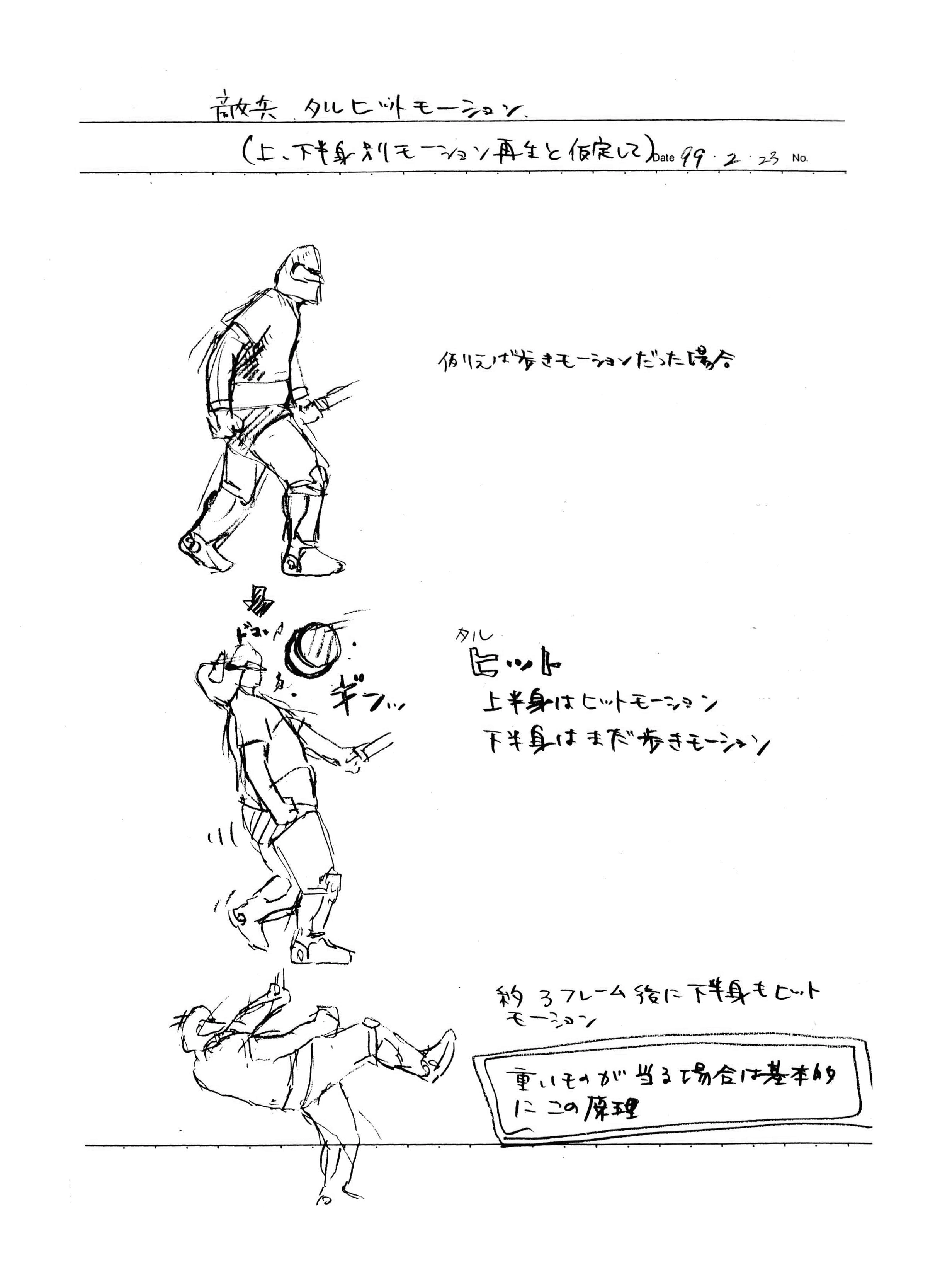
A concept detailing how enemy soldiers should physically react to being hit with a thrown barrel was drawn on February 23rd, 1999.[5]
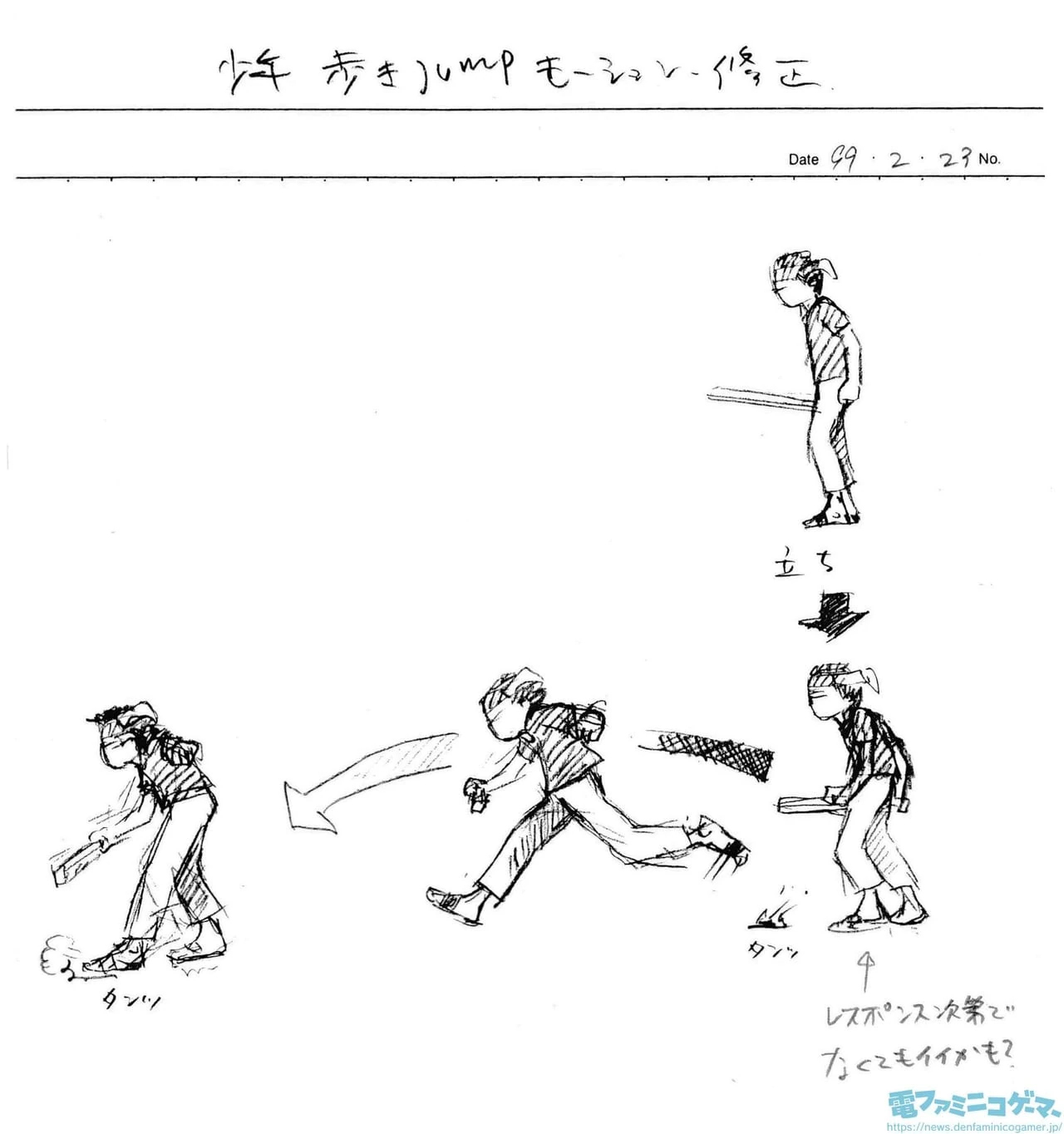
A correction to Ico's walking jump animation was sketched in a concept dated February 23rd, 1999.[5]
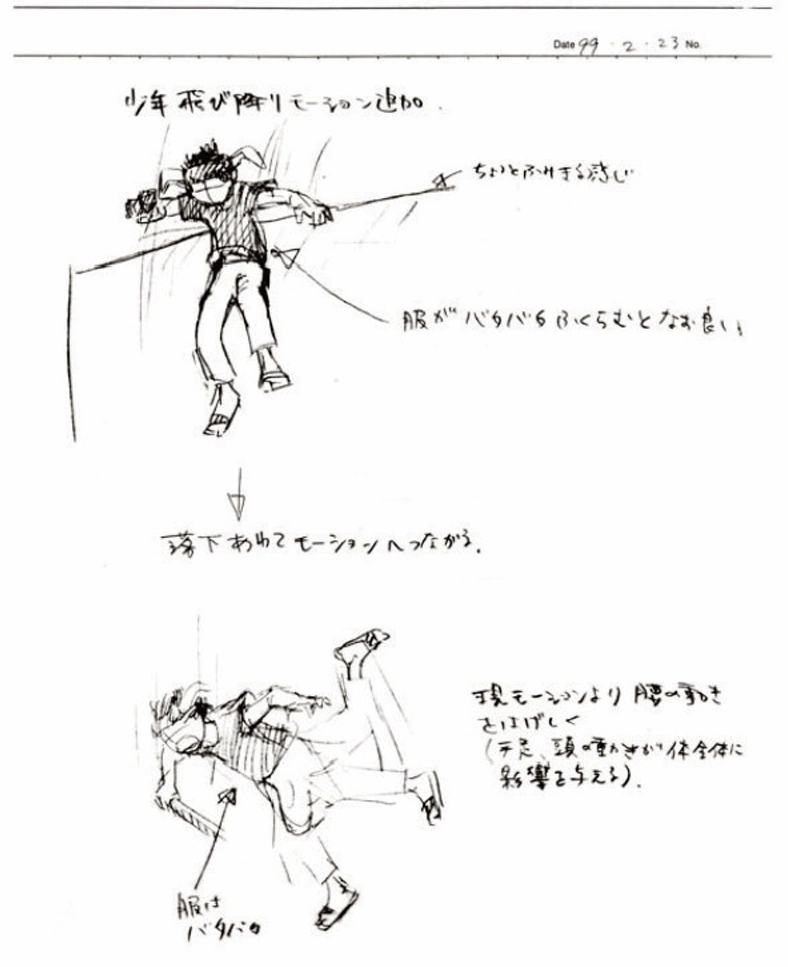
A concept for Ico's falling motion was drawn on February 23rd, 1999.[6]
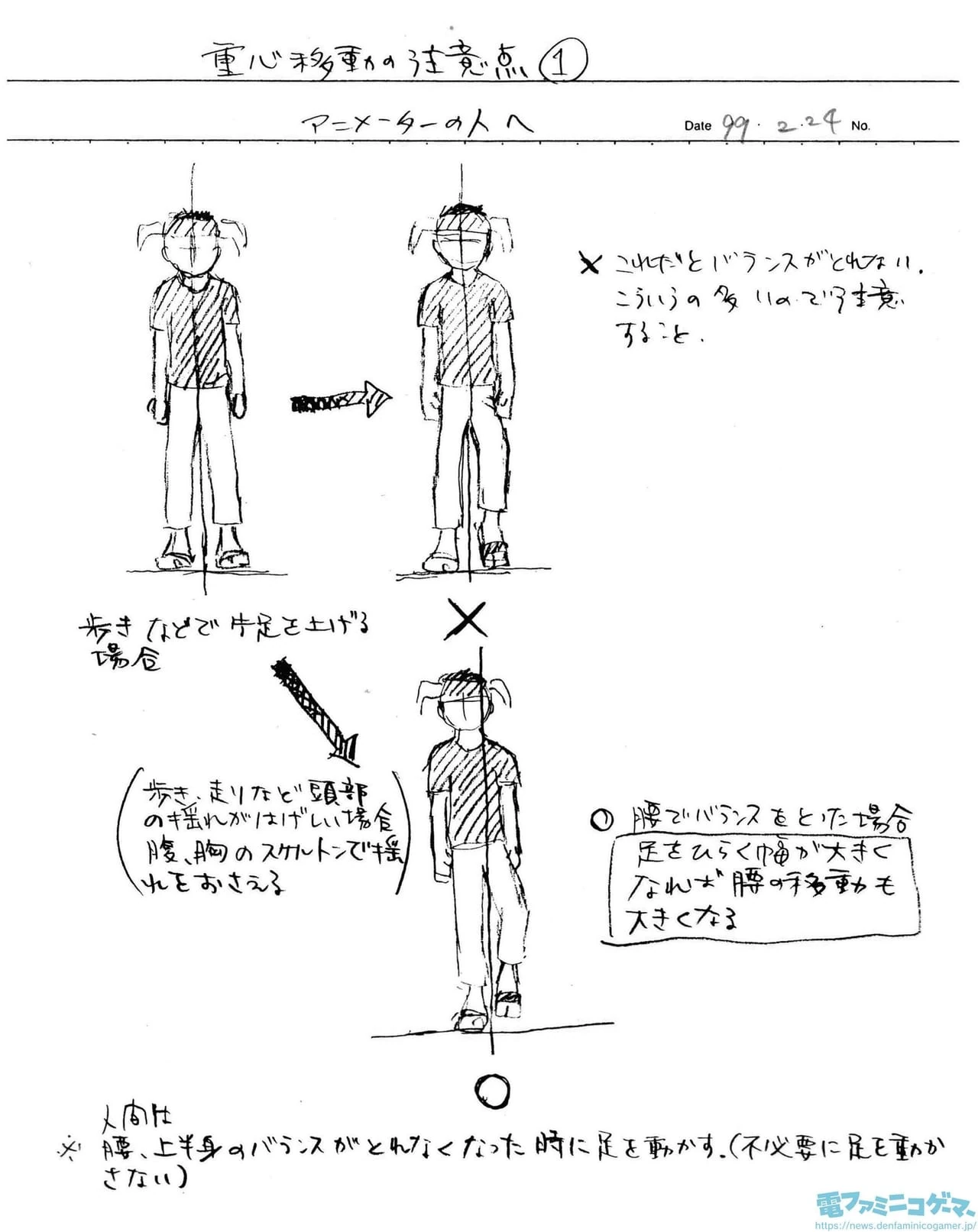
Specifications regarding Ico's center of gravity when walking were detailed on a page dated February 24th, 1999.[5]
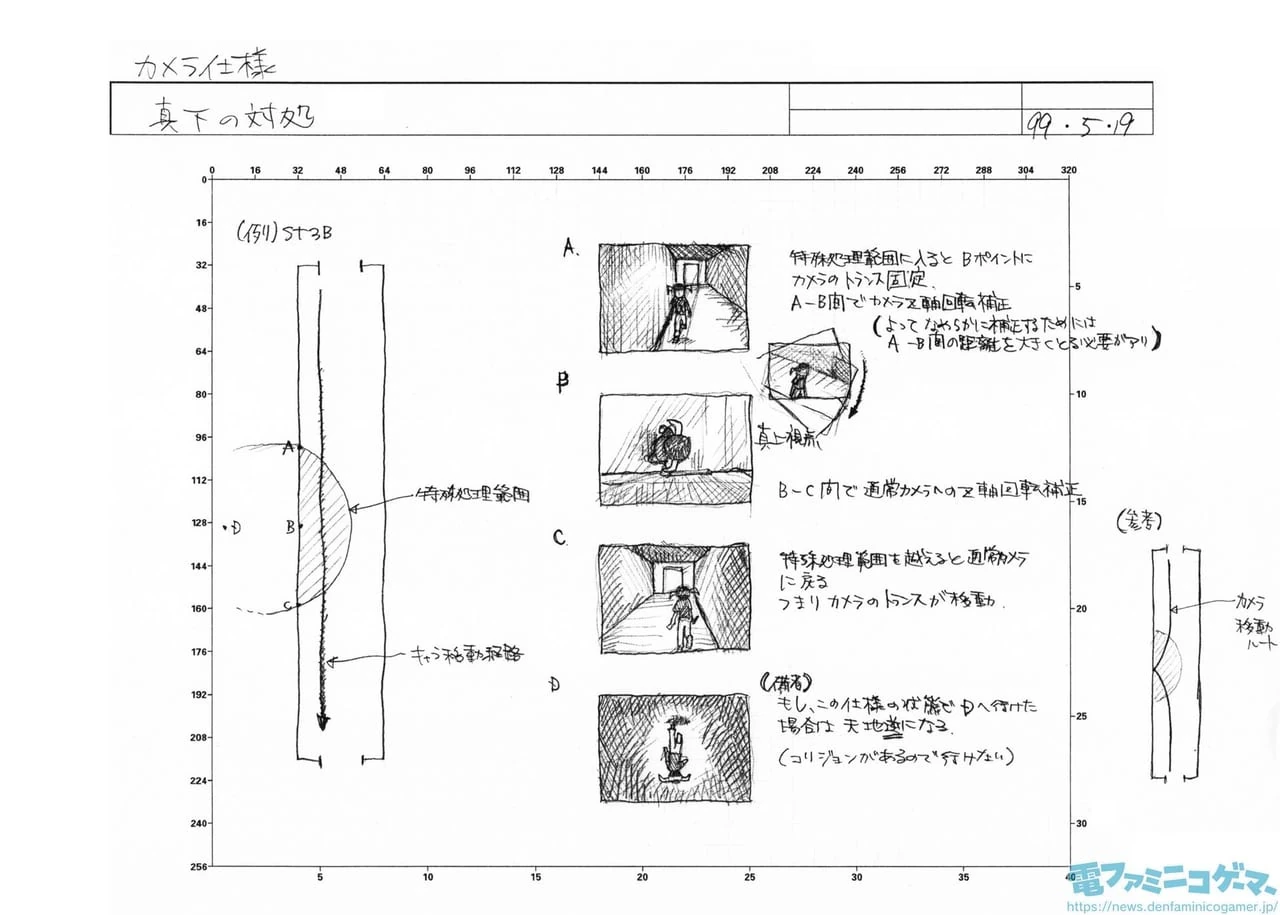
A concept for the camera motion in tight corridors, such as the one below Sunbeams, was drawn on May 19th, 1999.[5]
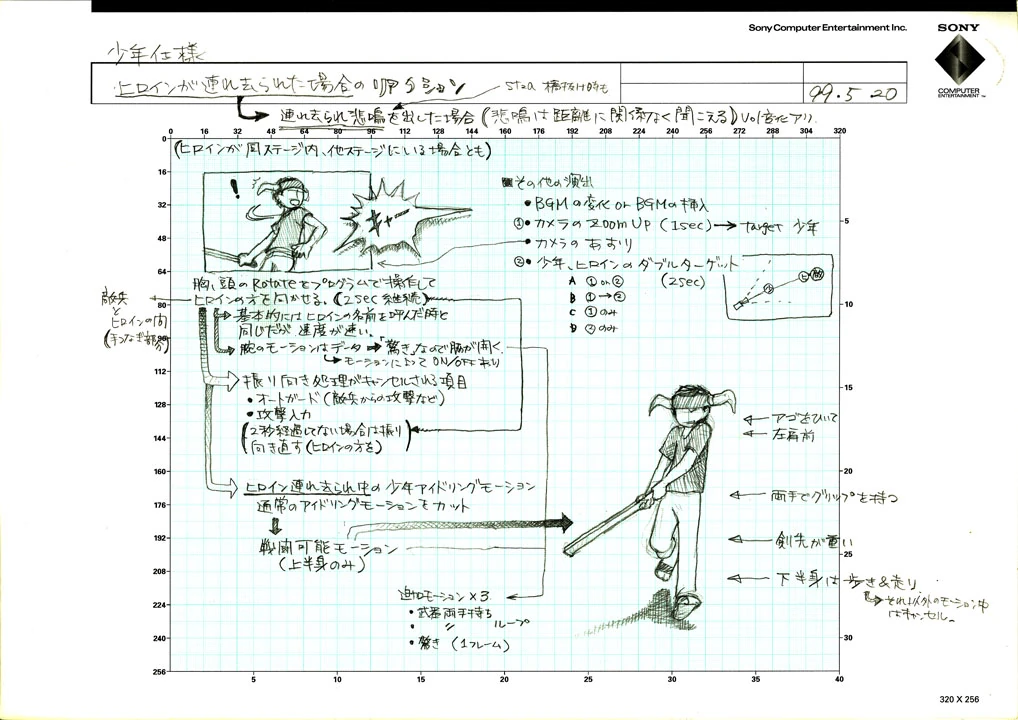
A page detailing how Ico physically reacts when Yorda is captured, as well as how his stance changes during combat, was drawn on May 20th, 1999.[7]
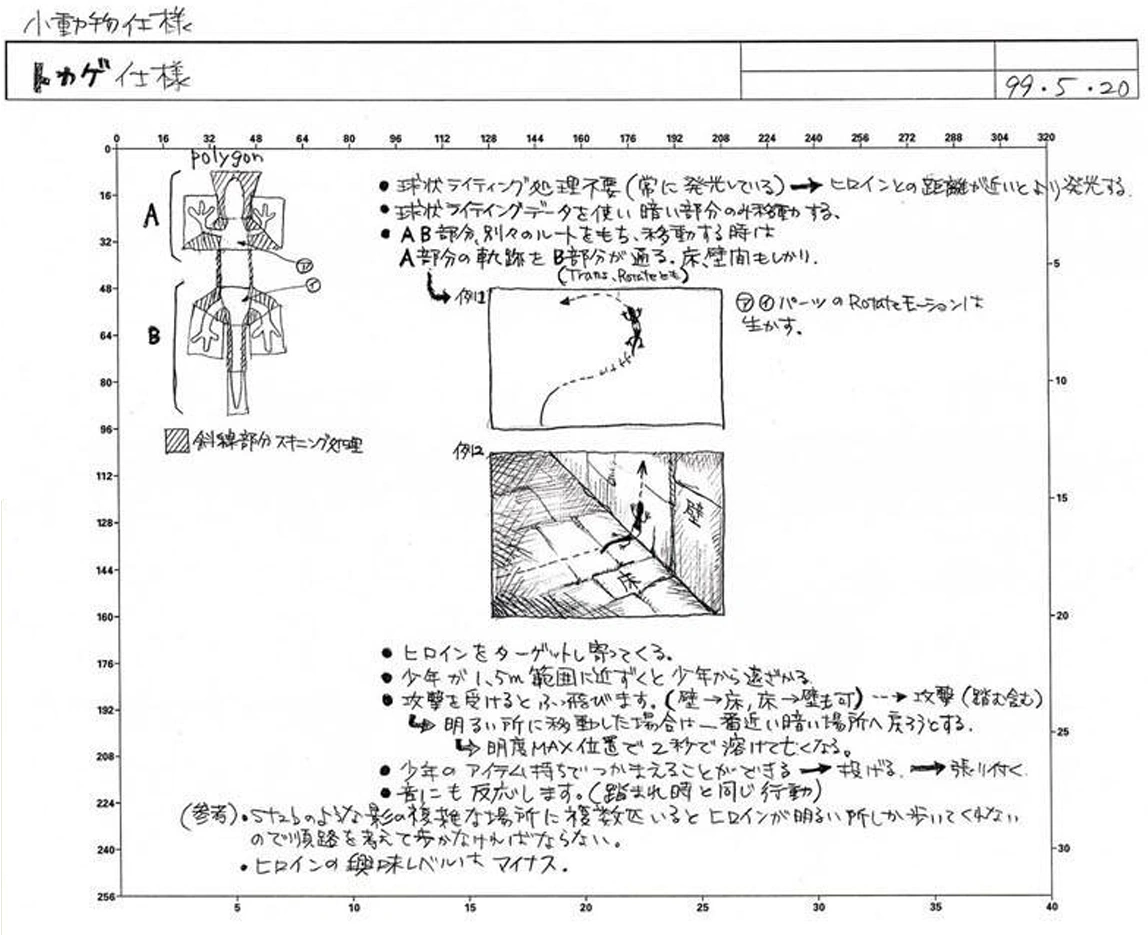
Specifications for the unused Gecko were detailed on a page dated May 20th, 1999.[8]
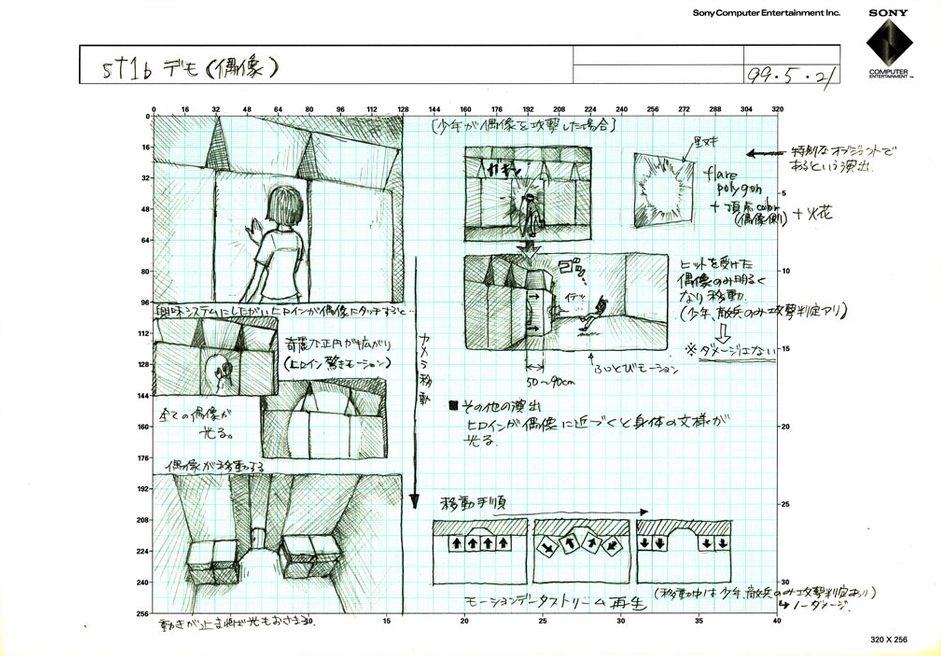
Interactions with Idol Gates for st01b (Shadows), and their resulting movements, were detailed in a concept dated May 21st, 1999.[7]
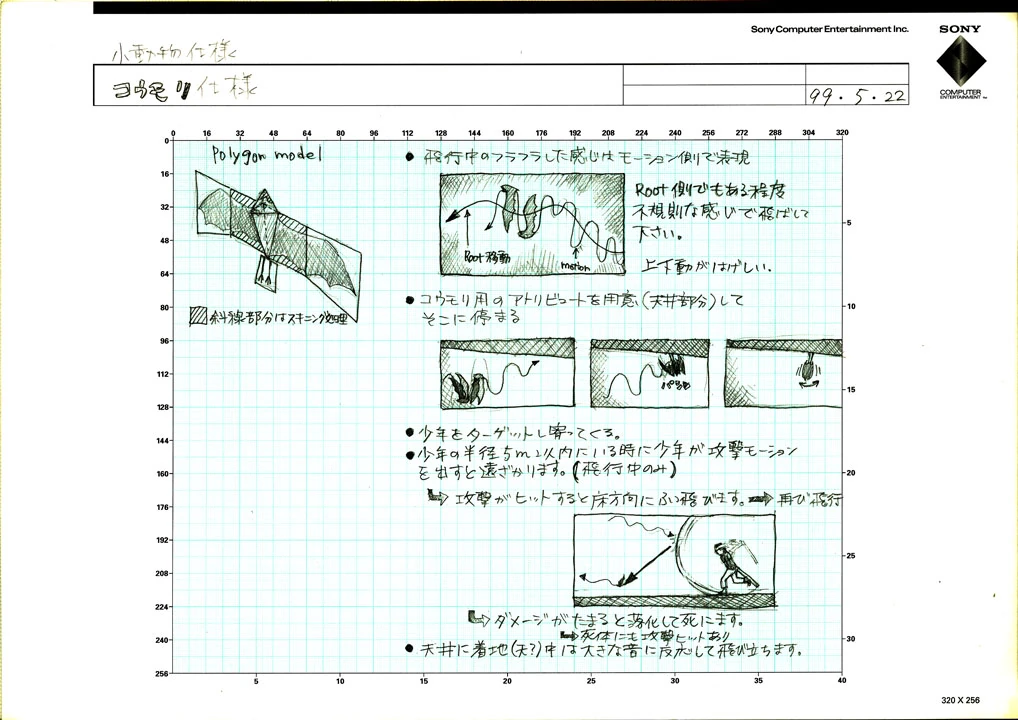
A concept with both the polygon mesh specifications and behaviors of the cut Bat animal was drawn on May 22nd, 1999.[7]
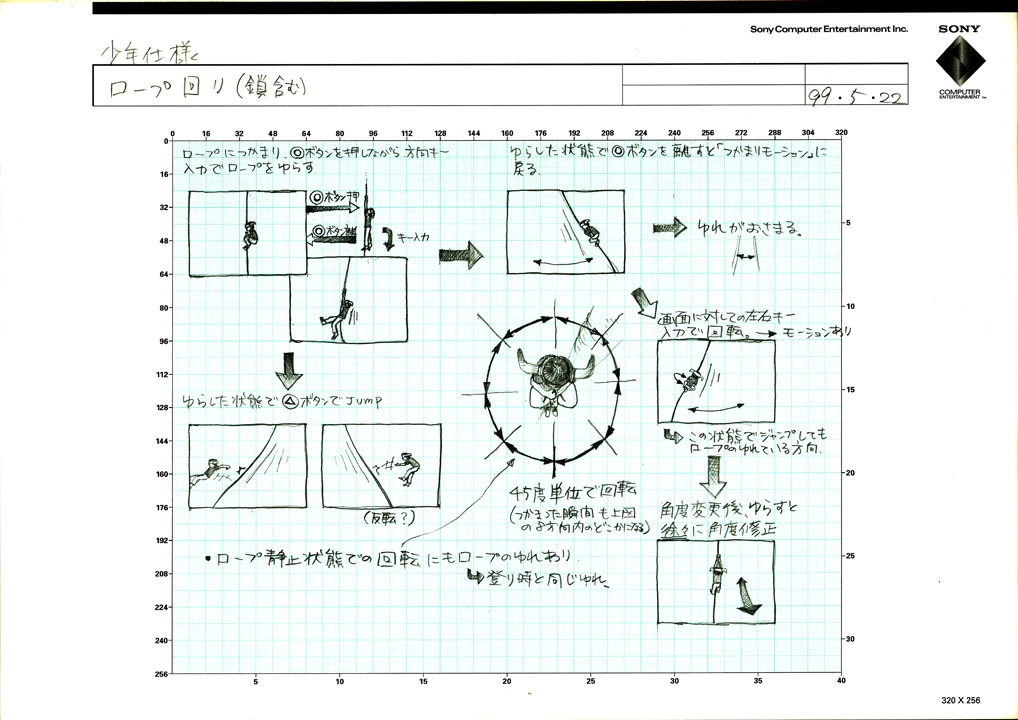
A page detailing the way Ico idles and swings on ropes was drawn on May 22nd, 1999.[7]
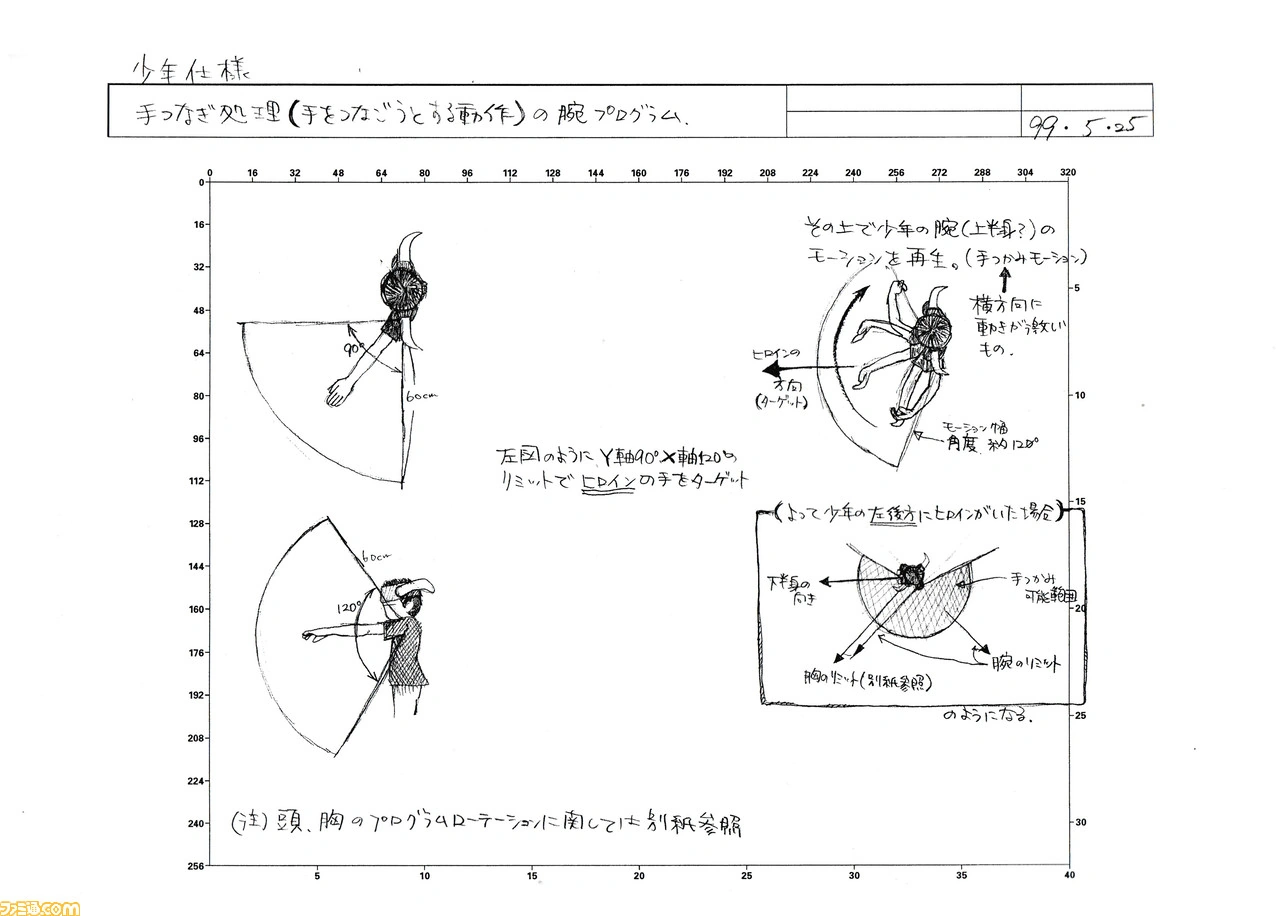
Specifications regarding how Ico's hand moves to grab Yorda's hand were detailed in a concept drawn on May 25th, 1999.[9]
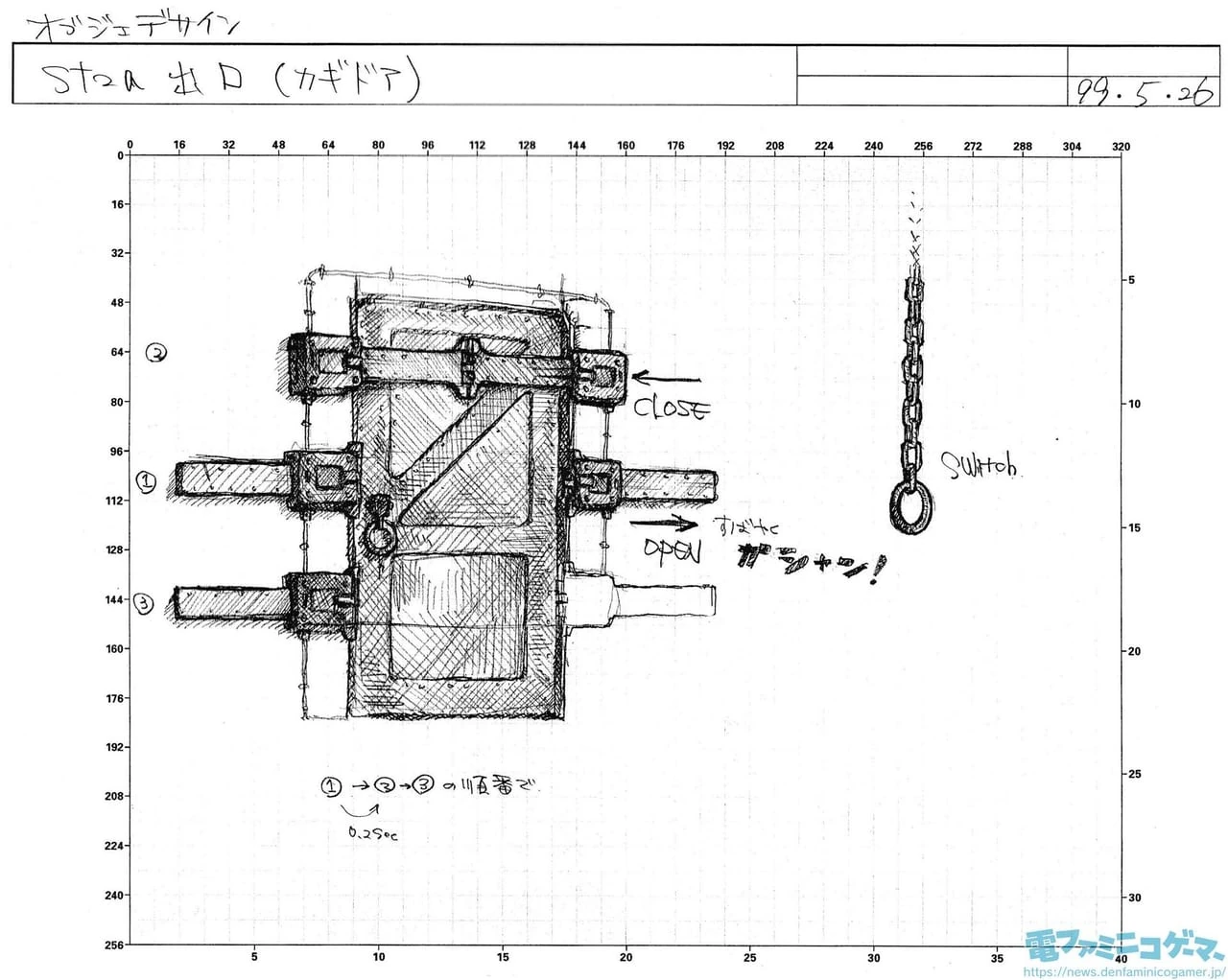
A cut exit door for Waterfall, featuring three locks and a chain switch, was sketched in a concept dated May 26th, 1999.[5]
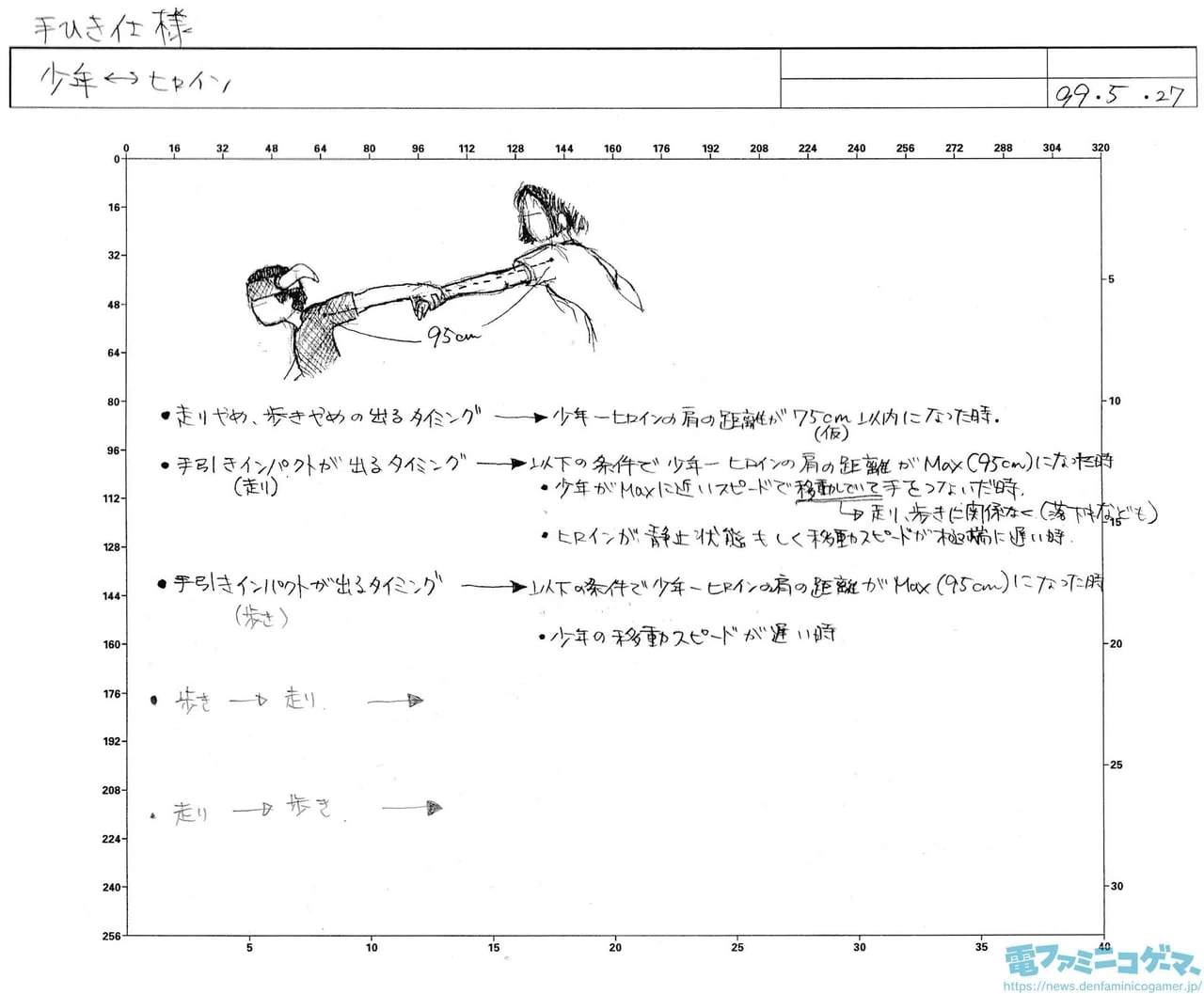
A page explaining under what conditions Ico and Yorda's arms should be taut or relaxed while holding hands and moving was drawn on May 27th, 1999.[5]
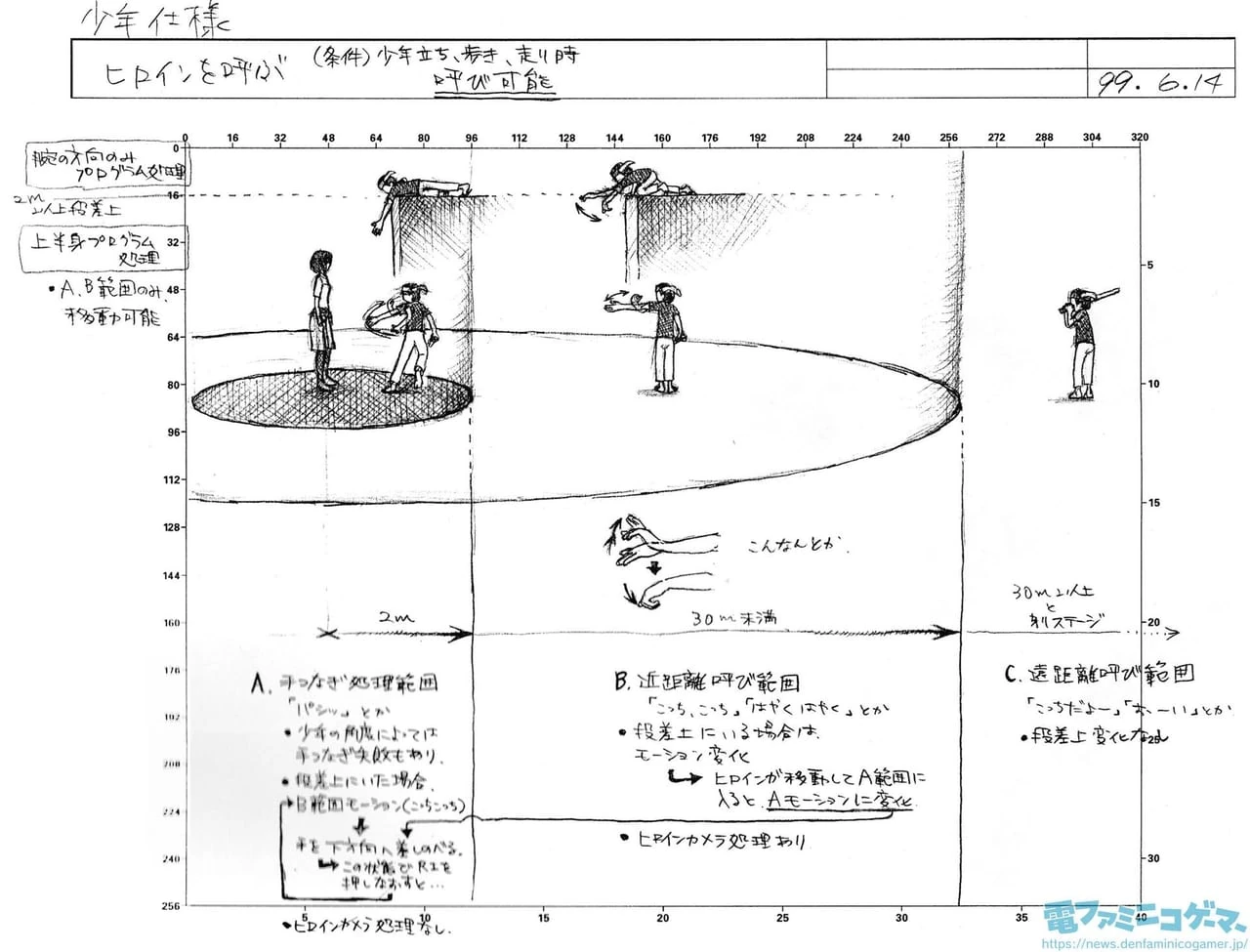
Specifications for how Ico gestures and calls towards Yorda at different distances were detailed in a concept drawn on June 14th, 1999.[5]
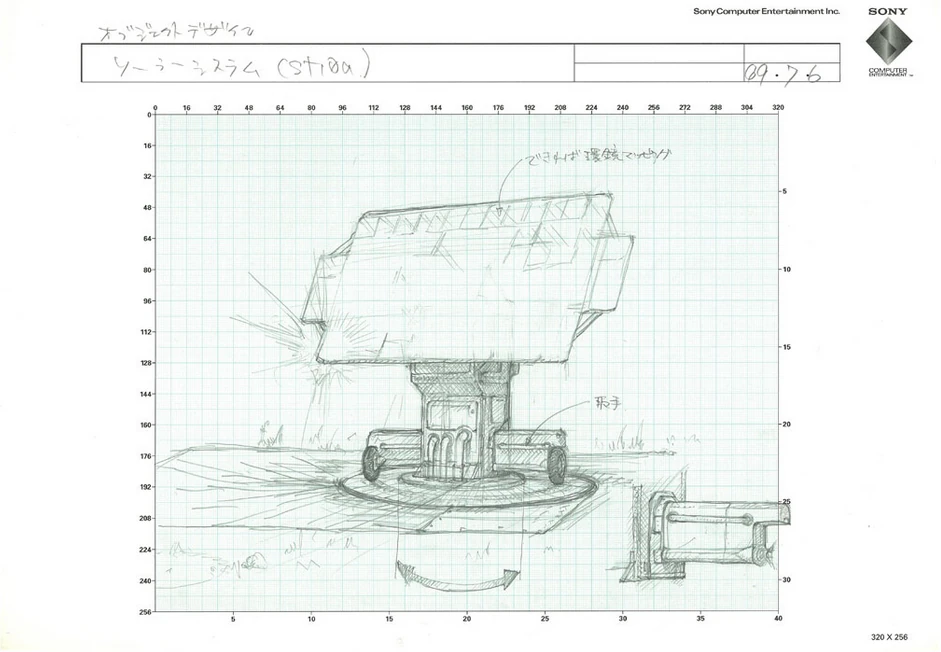
A concept for an early design for the sun reflectors, one of which used to be located on st10a, was drawn on July 6th, 1999.
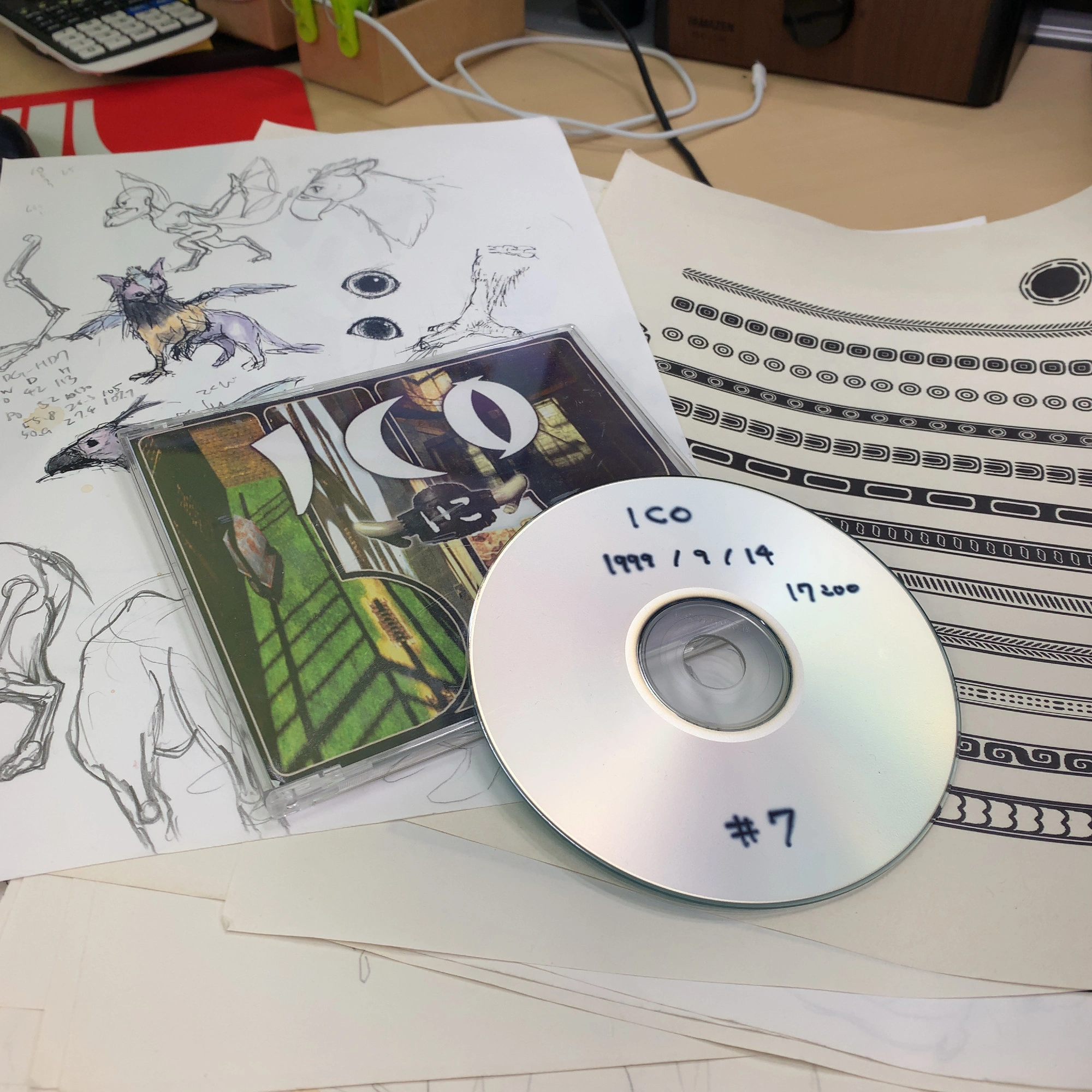
On September 14th, 1999, at 17:00 (5pm JST), a build of the game was compiled. 10 discs of this version, presumed to be the final one made for the PlayStation 1, were distributed to staff members for playing and checking their work.[10]
PlayStation 2 Era (1999-2001)
Sometime in September of 1999, the transition to PlayStation 2 was internally announced, and everyone on the team was interviewed regarding the change. From October of that year to March 2000, the team was given access to, and tested, the new console hardware. Across those months, they implemented new tools, and discovered new means of artistic expression. Meanwhile, the team's planners, alongside Fumito Ueda, drew a variety of concepts with new stage specifications.[11]
From April to early May, the team prepared three stages for the E3 2000 demo. These were Sunbeams, an early Dark Room, and Chandelier. During E3 (from May 11th to the 13th), the demo was available at Sony's PlayStation Booth. Footage reveals that the Chandelier puzzle wasn't completely finalized at this time. Compared to the final release, the room had players moving in the opposite direction, from the low end to the high end, where a single Idol Gate blocked the path through the narrow doorframe.[12]
By June 2000, storyboards resembling the final product's early cutscenes were being made.
Known Dates
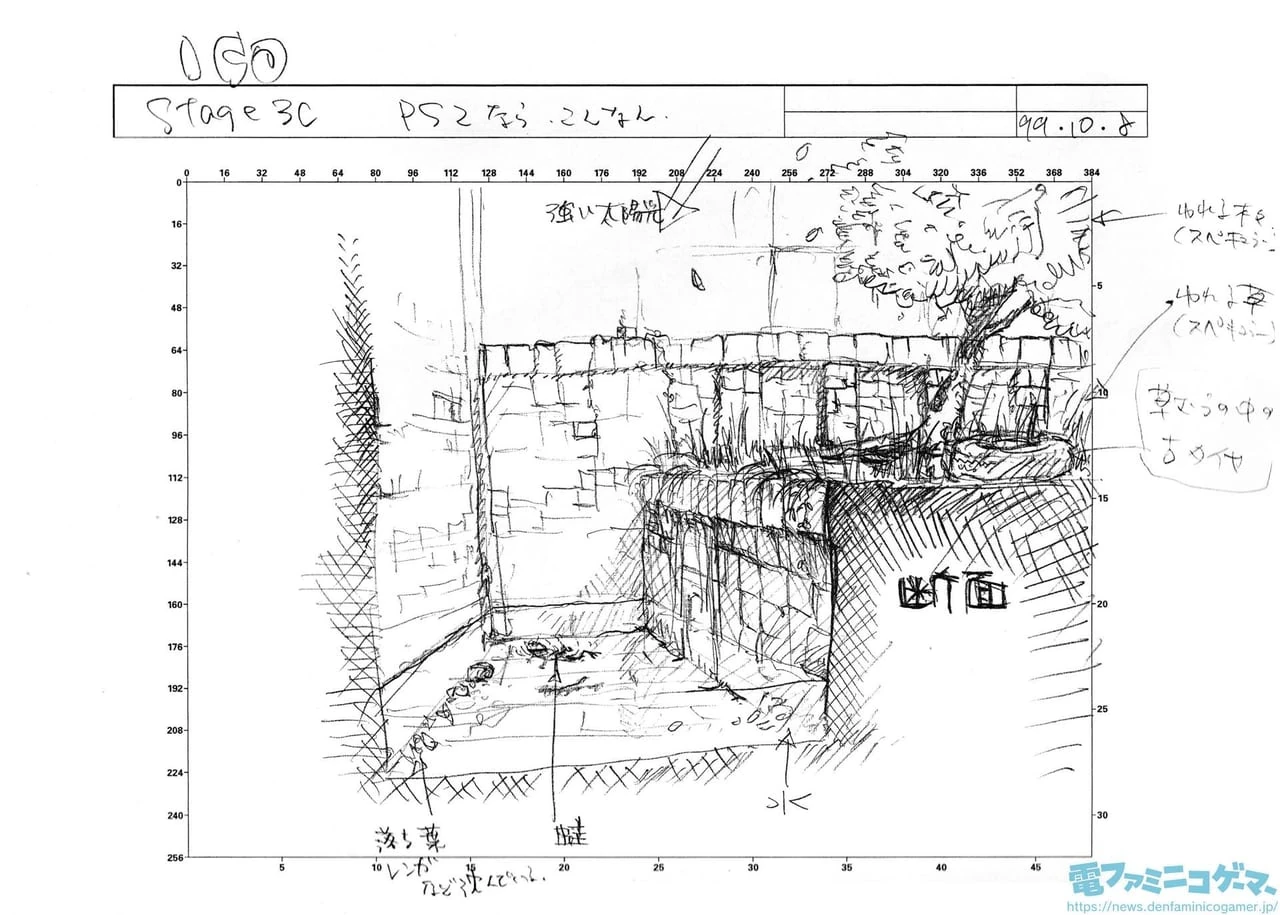
A revision of Stage 3C (the back half of Sunbeams) suggesting the use of specular maps for swaying branches and grass was drawn on October 8th, 1999.[5]
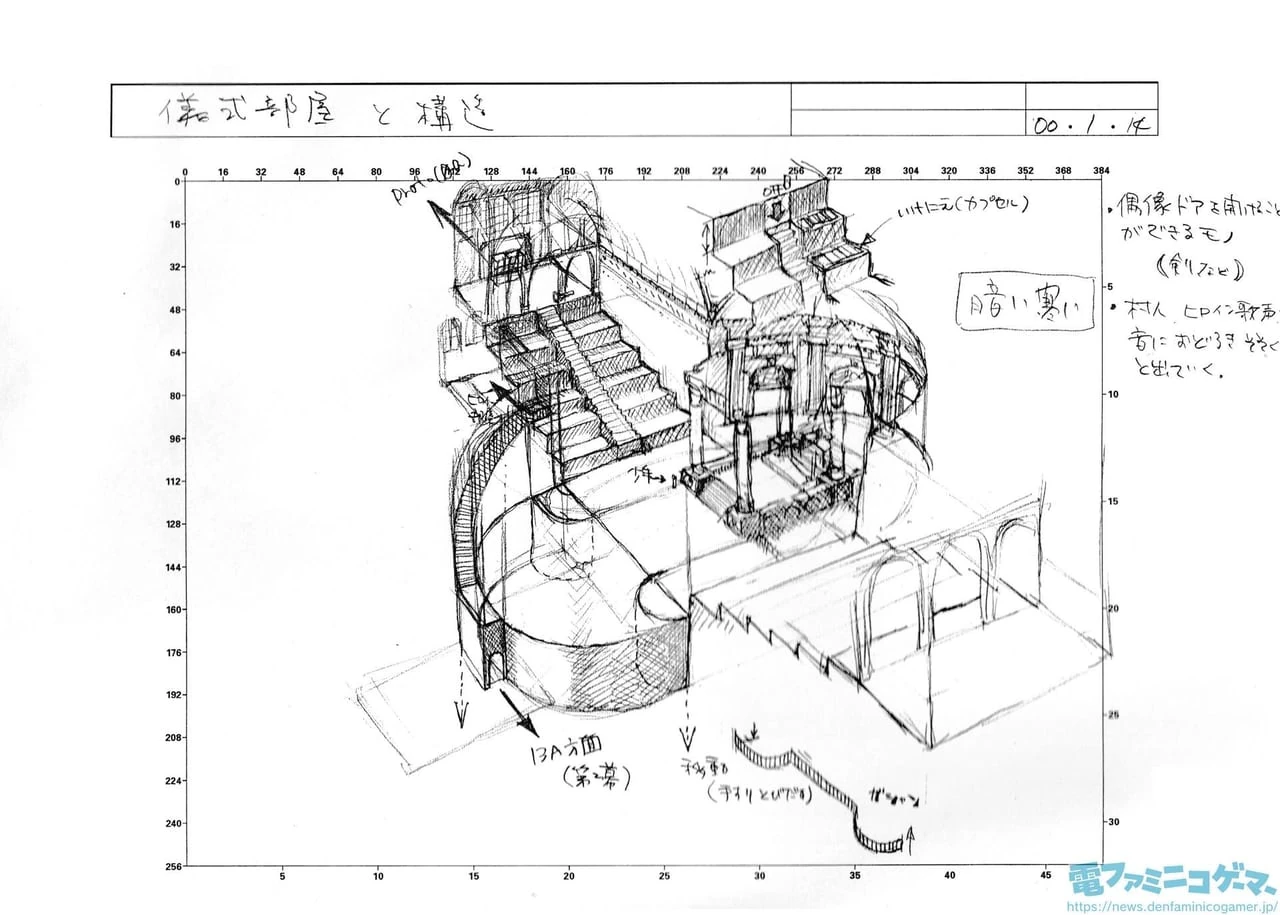
A concept page for a 'Ritual Room' was drafted on January 14th, 2000.[5]
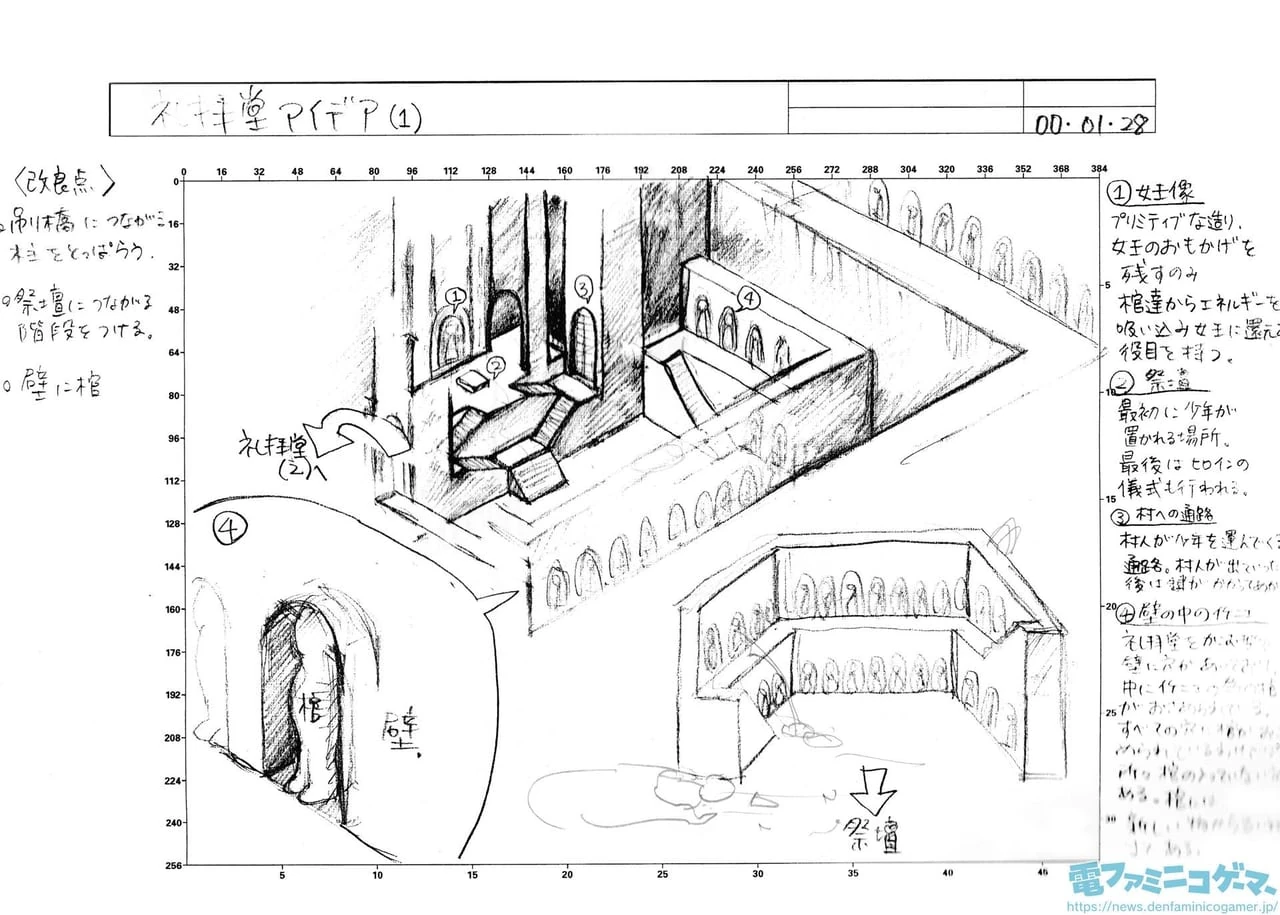
A concept revision for the existing 'Chapel' area (later to be the Altar) was drawn on January 28th, 2000.[5]
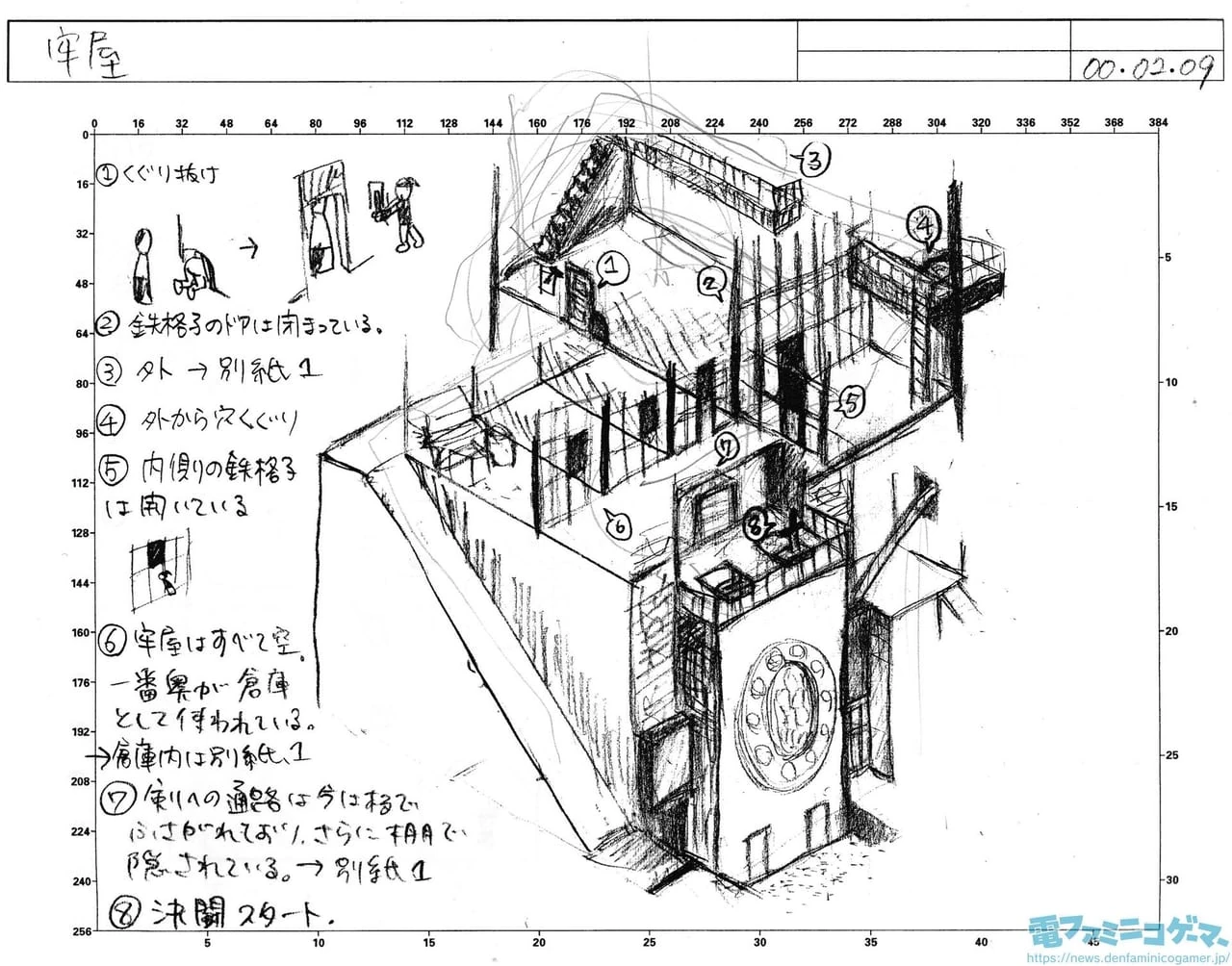
The layout and events within the 'Prison' area (later to be adapted into East Idol Stairs) were detailed in a concept on February 9th, 2000.[5]
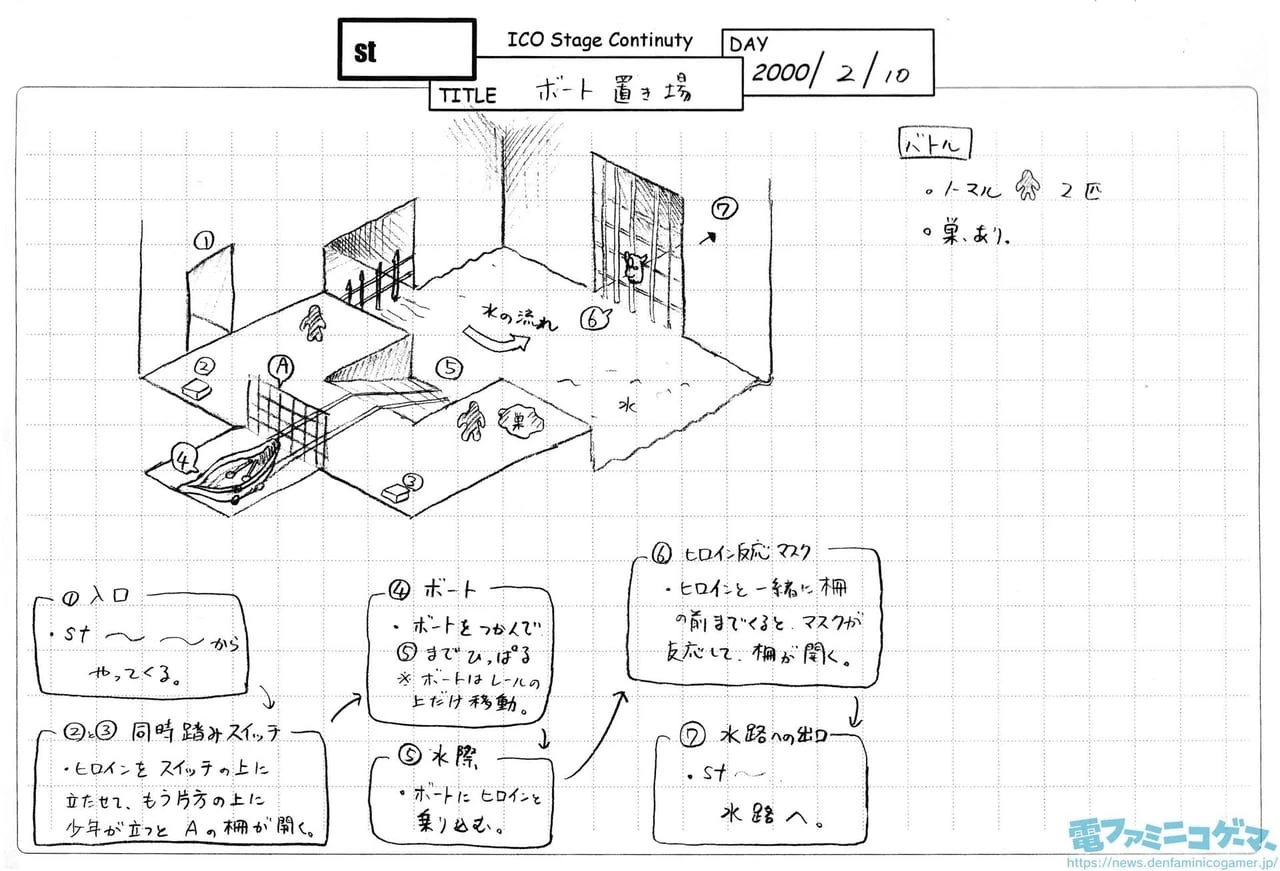
Details centering around a cut 'Boat Storage' area and its contents were laid out on February 10th, 2000.[5]
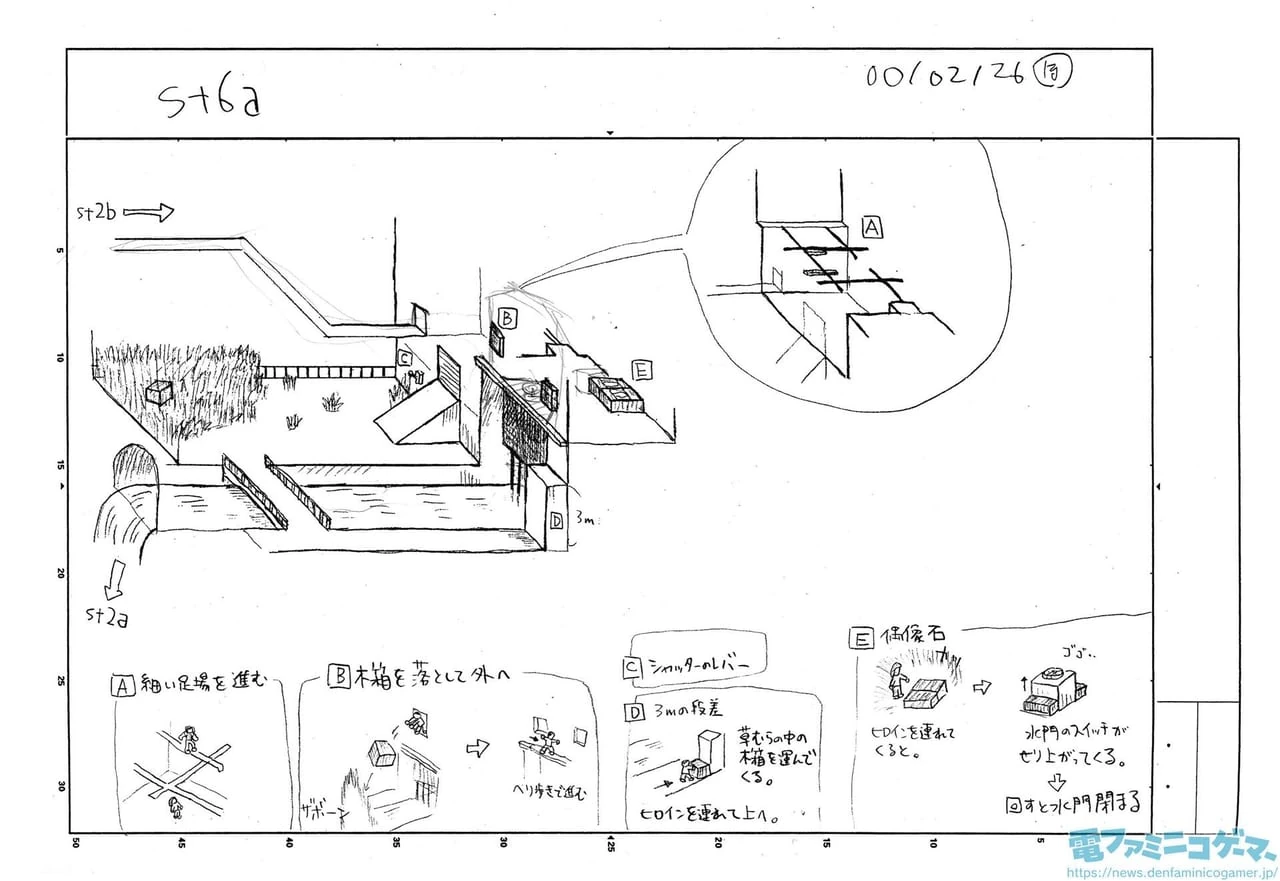
Early plans for the Sluice puzzle were drawn on a page dated February 26th, 2000.[5]
A continuity map of Ico's journey back into the castle, and the various stages he passes through, were drawn in a concept dated March 21st, 2000.[5]
Storyboards for when Ico releases Yorda from her cage, speaks with her, and then protects her from encroaching Shadows were drawn on June 7th, 2000.[5]
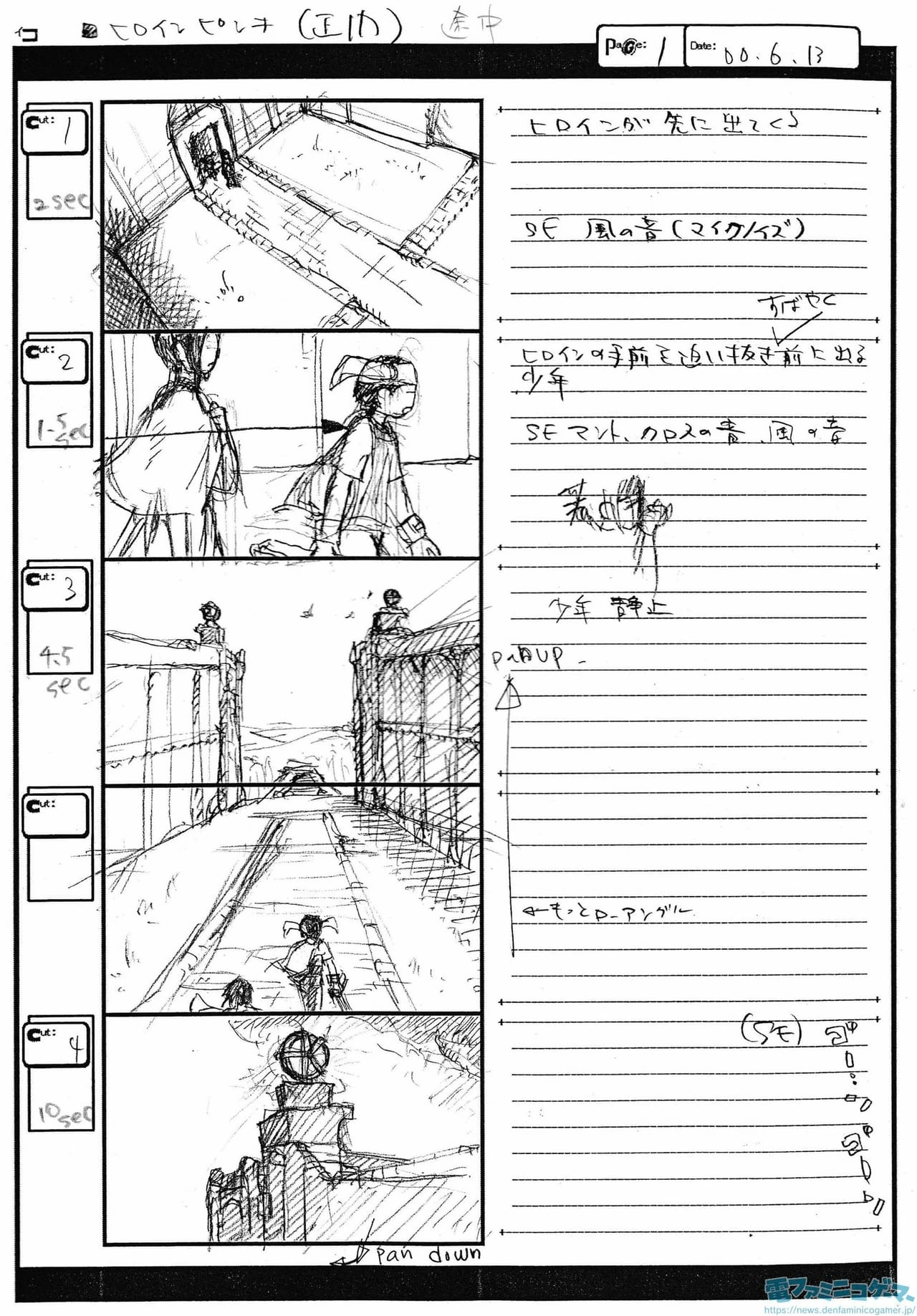
Storyboards for the scenes when Ico falls out of his capsule, as well as when Ico and Yorda first reach the Main Gate were drawn on June 13th, 2000.[5]
Prior to US Retail Release (Spring-Summer 2001)
In April 2001, a demo disc titled Play-Pre 2 Volume 1 (PCPX-96611) released in Japan to PlayStation CLUB members. It contained a video preview of ICO, showing progress on the character models as well as many new stages. The song playing over the footage is "You Were There", proving the game's ending theme had been finalized and recorded at this point in development.
Controller instructions displayed just before the demo for ICO begins in the Jampack Summer 2001 Demo Disc.
From May 17th to May 19th, at E3 2001, a demo for ICO was available among the games at Sony's PlayStation Booth. This version of the game seemed to feature an 'Evade' maneuver where, at the press of a button, Ico hops back a few steps, while facing forward. Footage from the demo, and some out-of-date controller instructions at the start of following demos, suggest this 'Evade' command was tied to the button.
On June 8th, 2001 at 12:49 PM, a demo build was compiled. This playable demo was the first to see retail release, as it featured on the PlayStation Underground Jampack Demo Disc - Summer 2001 which was publicly available for purchase on July 11th, 2001.[13]
On June 26th at 8:01 PM, another demo was compiled. This demo was available on the following discs: PlayStation 2 Demo Disc Version 2.3 (SCUS-97155), Kiosk Demo Disc 2.3 (SCUS-97156), and Official U.S. PlayStation Magazine Demo Disc 49 (SCUS-97158).
On August 2nd at 5:36 AM, ICO's US Demo Disc was compiled.
On August 7th at 3:03 PM, just about two weeks before US retail version concluded development, a prototype of the full game was compiled.








 button.


